September 12, 2026
Video Production Services: Plan Your Studio Shoot
By
House of Legends Team
Updated September 15, 2026
For video production services in Nepal, define your audience, shooting location and final deliverables before choosing a team.
A studio interview and a location shoot may share a script, but they need different crews, schedules and permissions. Before you request a quote, decide what must happen on camera and what the finished files must do. The checklist below helps turn that idea into a production brief. House of Legends focuses on studio production in Paknajol, Thamel, Kathmandu; off-site work needs a separate scope.
Choose a format that fits the message
A conversation with a founder can explain the thinking behind a business. A customer interview can explore a real experience, with permission to share it. An expert Q&A can answer questions that a sales page leaves unresolved. Decide what the viewer should understand before deciding how many cameras to use.
Studio interviews work well when the speakers and conversation carry the story. A project that depends on outdoor scenes, factory access, event coverage or several locations requires a separate location-production plan. Describe these requirements when enquiring rather than treating them as part of a standard studio booking.
Write a production brief before the shoot
- Audience: who should watch, and what do they already know?
- Message: what is the main point, and what facts or claims need approval?
- People: how many speakers, what roles and which spoken languages?
- Location: studio only, or additional scenes elsewhere?
- Outputs: full video, short clips, captions, thumbnails and any audio export.
- Schedule: preferred shoot date, approval contact and final publishing deadline.
Choose one person to consolidate feedback. For a brand, prepare approved names, titles, logos and talking points. For an interview, use a flexible question map that leaves room for useful follow-ups instead of trying to script every answer.
Understand the three stages of production
Pre-production: make the decisions that affect recording
Confirm the guests, session length, framing and visual references. Identify anything the set must accommodate, such as a demonstration or a product on the table. Discuss clip formats now: a horizontal episode and vertical clips may need different compositions.
Production: capture usable pictures and sound
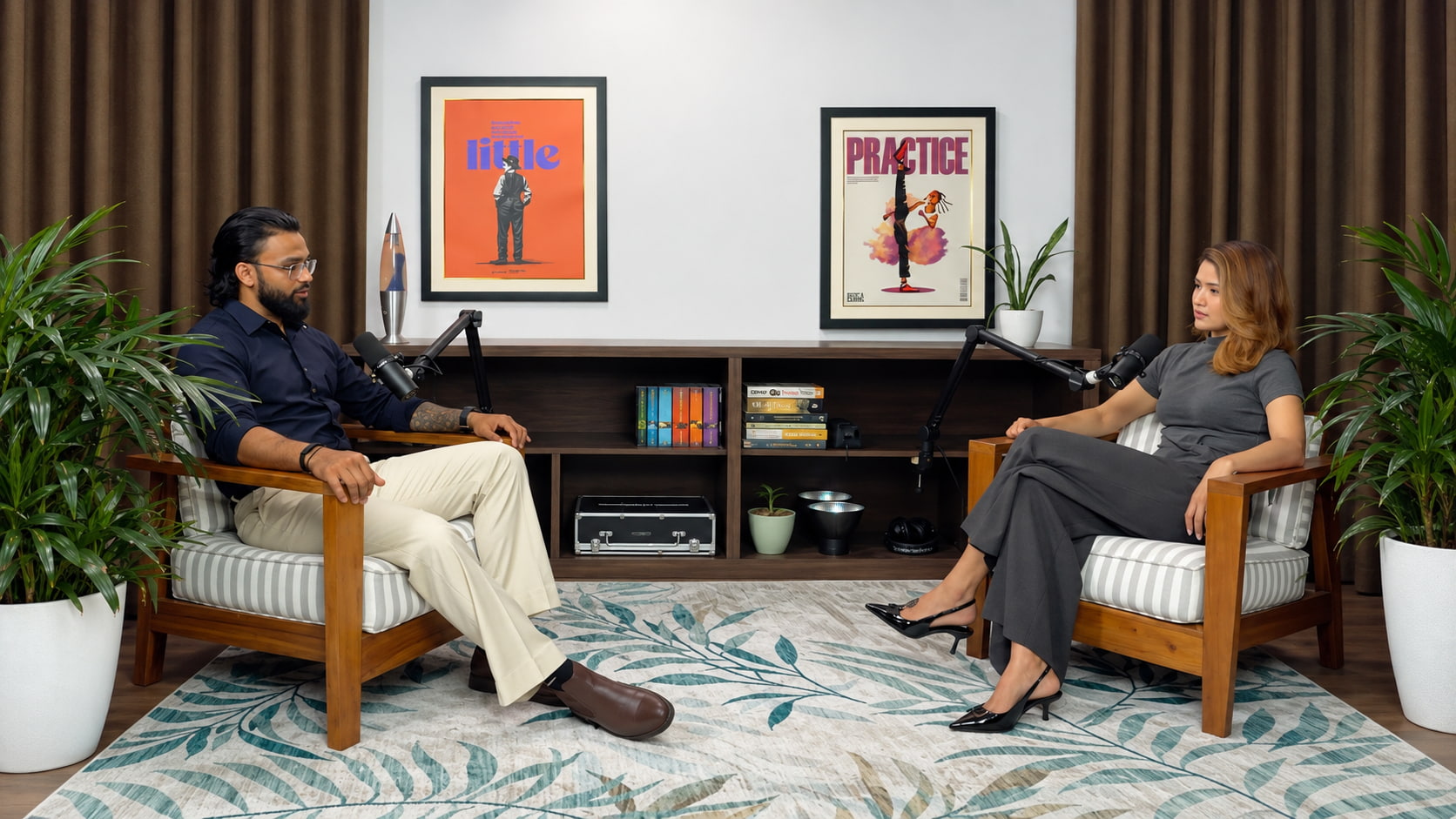
The technical team prepares cameras, lights and microphones, then checks framing and audio before the conversation starts. Confirm who prepares and runs the session, then match the camera plan to speaker count and format. Not every project needs every available camera.
Post-production: build the agreed outputs
Editing selects and structures the material, coordinates camera angles and prepares the finished video. Depending on the agreed package, this can include audio cleanup, captions, thumbnails and short clips. Our video editing hiring guide explains the files, feedback and deliverables to confirm.
Know what the Kathmandu studio can provide
For studio productions, House of Legends can combine Sony A6400 cameras, an ATEM Mini Pro ISO workflow, Shure SM7B microphones and RODECaster Pro II recording. DJI wireless microphone options and ATH-M50x monitoring headphones are available for sessions that need them. The exact setup depends on the number of speakers, movement and final outputs, so confirm the configuration in your production brief.
Technical names matter less than responsibility. Your quote should still state who operates the cameras, monitors every microphone, checks the lighting, backs up the recording and prepares the files for editing or handover.
Compare proposals using the same scope
Ask each provider to quote against the same recording duration, guest count, output list and review expectations. Separate studio time, crew support and post-production. Clarify overtime, rescheduling, file handover, applicable taxes and extra revisions before paying a deposit.
The WHO Nepal 2024 video production brief, which itemises production, editing, subtitles and travel. It covers a wider production scope than a studio interview, but offers a useful example of separating filming, post-production and travel costs.
Choose relevant work samples
Watch a complete example similar to your planned format, not only a fast showreel. Listen to speech, watch how camera cuts follow the conversation and check whether graphics remain readable. Look at both the full video and a short clip when you need both outputs.
Our Work page links to podcasts and creator productions. Use those examples to discuss the pacing and framing you want. A portfolio shows previous work; it does not guarantee a particular audience size, conversion rate or viral result for your project.
Frequently asked production questions
Do you provide video production across Nepal?
Our confirmed offer is studio production in Kathmandu. If your project needs another location, travel, specialist equipment or an off-site crew, send the details so availability and scope can be confirmed. Do not assume nationwide filming, permits or drone work are included.
Can one session create several pieces of content?
Yes, a recording can supply an episode and shorter clips when coverage and deliverables are planned together. Agree the number and format of clips, and allow enough context for each to stand alone.
Discuss a Kathmandu studio production
Read about our recording team and crew responsibilities, then share your production brief. Include your audience, speaker count, proposed date and output list so our team can recommend an appropriate studio scope.