September 12, 2026
Multi-Camera Recording: Plan Useful Coverage
By
House of Legends Team
Updated September 15, 2026
Multi-camera recording in Nepal works best when the camera plan, audio and final video formats are decided together.
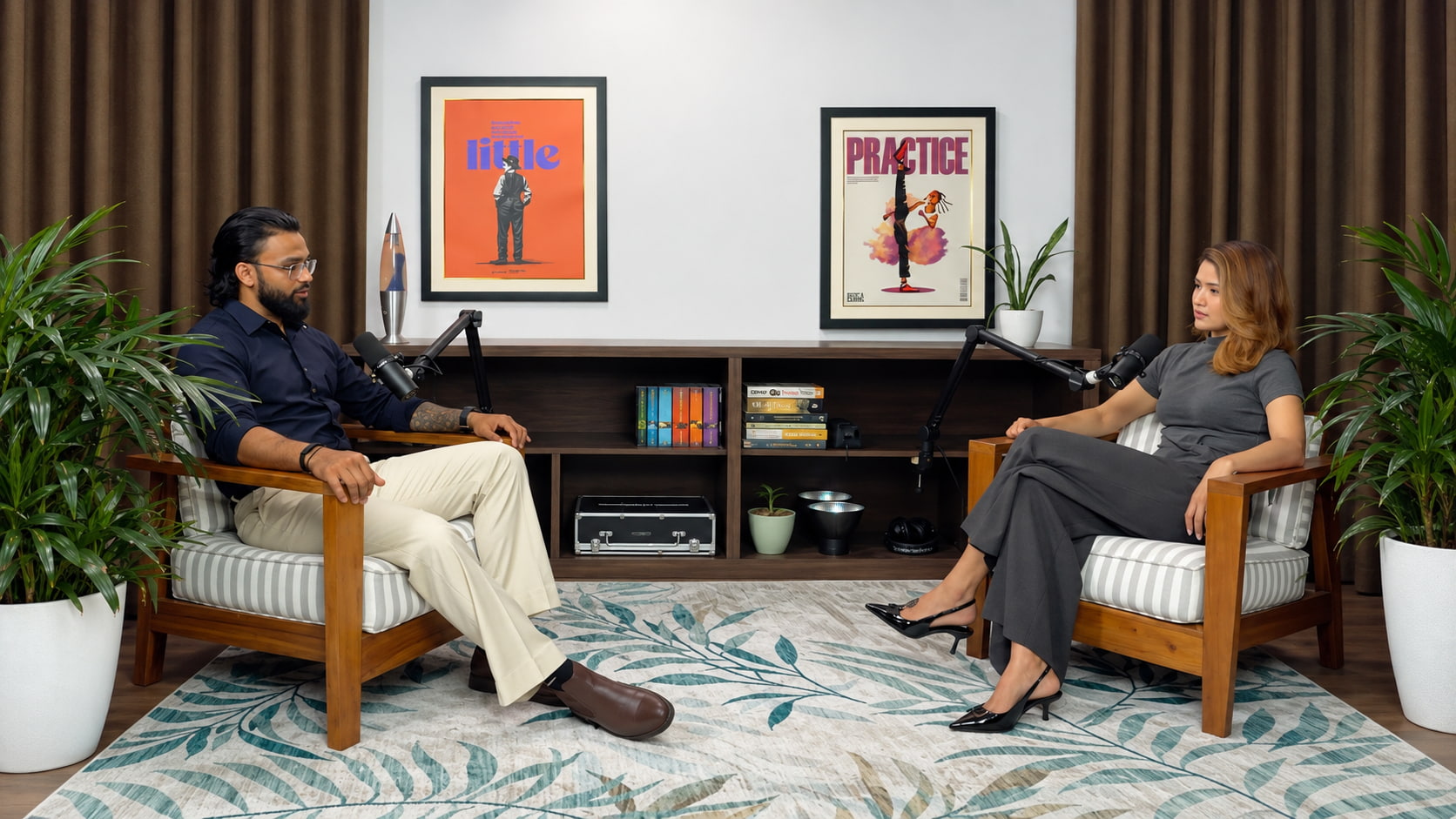
For a host-and-guest interview, one wide view can establish the conversation and individual views can keep reactions clear. Add an angle only when it gives the editor a useful choice. That is the point of multi-camera recording: coverage that serves the story, not a camera count. House of Legends records podcasts, interviews and branded conversations with multiple Sony A6400 camera angles in Kathmandu.
Start with the people and action
For a seated interview, a wide shot can establish the relationship between host and guest. Individual angles show expressions and make it easier to follow who is speaking. A panel or a demonstration changes the plan because more people or objects must remain visible.
Tell the team about movement, seating and anything you will show on camera. Bring a reference frame if you want a particular look. More angles are not automatically better; each one should add useful information without making the room uncomfortable for guests.
Agree the role of each angle
- Wide coverage: establishes the room and keeps the conversation understandable when several people interact.
- Speaker angles: show the host and guest clearly without distracting changes in size or position.
- Reaction coverage: captures listening and responses that help the edit feel natural.
- Detail coverage: supports a demonstration when the viewer needs to see an object or action.
The crew should check frames with guests in place before the full recording begins. Watch for blocked faces, awkward eye lines and table objects that cover hands or microphones. Our recording crew guide explains who should monitor those decisions.
Keep audio and cameras in sync
Several cameras may create separate files that need to align with the audio in post-production. Ask how the recordings are synchronised and checked. A camera angle with drifting or missing audio can make an otherwise good conversation harder to finish.
The team should agree recording settings and monitor capture throughout the session. Ask what happens at breaks or camera restarts and how the editor will identify matching takes. Audio remains central: attractive images cannot compensate for speech that is missing or difficult to understand.
Understand the studio camera workflow
In our Kathmandu studio, Sony A6400 cameras can run with an ATEM Mini Pro ISO workflow. The switcher manages several camera feeds, while isolated recordings preserve options for the edit. Ask how many angles your package includes and whether handover means camera files, a switched programme file, an edited episode, or a combination.
Camera coverage does not replace a separate audio plan. Confirm microphone count, how sound will be monitored and whether you receive separate audio files.
Plan vertical clips before the shoot
A horizontal frame that includes two speakers may not crop cleanly into a vertical clip. If short-form delivery matters, discuss individual coverage and room around each face. Leave space for captions without placing important gestures or objects where text will obscure them.
Choose clips around complete ideas rather than a dramatic sentence without context. A useful short can include the question, a clear answer and a takeaway. Confirm how many clips are included and who approves the selections.
YouTube's upload recommendations identify 16:9 as the standard desktop aspect ratio while supporting other ratios. Confirm separate delivery formats where needed rather than assuming one export will suit every platform.
Make editing decisions support the conversation
Angle changes can show a speaker, reveal a response or cover an agreed trim. Cutting constantly can become distracting. Share a reference that demonstrates the pace you want, especially if your audience expects a calm, long-form interview.
Tell the editor about any sections that need removal, names that need correction and moments worth considering for clips. Our editing brief checklist explains how to organise that handover.
Questions to settle before booking
How many camera angles do I need?
Not necessarily. The useful setup depends on speaker count, movement, room layout and outputs. Ask the team to recommend coverage for your format and confirm the angles included in your booking.
Does multi-camera recording include an edited video?
Recording and editing are separate parts of the scope. Confirm whether you receive camera files, a finished episode or both. Agree audio handover, clip formats and delivery dates before the session.
Can the same recording support a podcast and social clips?
Yes, when the camera plan and edit package support both. The episode and clips should be specified separately, with caption languages and output count agreed in advance.
Plan your multi-camera session in Kathmandu
Watch examples on our Work page and send your recording plan. Include the number of speakers, expected duration and whether you need a horizontal episode, vertical clips or additional outputs.